
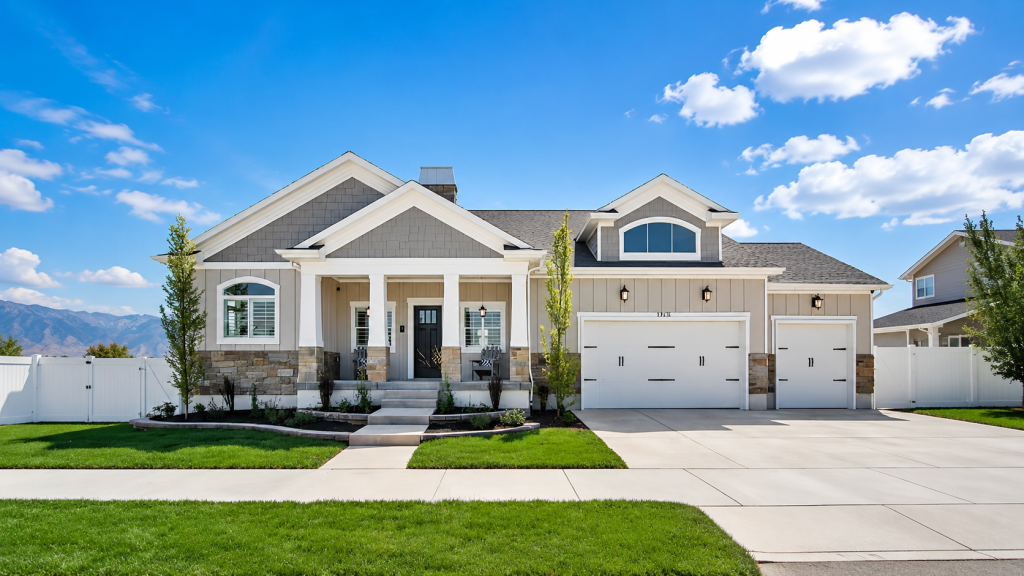
Exterior Painting Services in Tampa,FL
Your home’s exterior is its first line of defense against everything Florida’s climate throws at it: relentless UV radiation, humidity that rarely drops below 60 percent, afternoon thunderstorms that can dump inches of rain in under an hour, the ever-present threat of tropical storms, and biological growth that turns shaded surfaces green within weeks.
A professional exterior paint job does more than make your home look beautiful — it creates a protective barrier that shields your home’s structural surfaces from moisture intrusion, UV degradation, and biological damage.
When that barrier fails, the consequences extend far beyond peeling paint: moisture penetrates stucco and wood, mildew establishes itself in places you can’t see, and repair costs multiply.
Our Exterior Painting work protects homes. Enos Executive Painting has been protecting Tampa Bay homes with professional exterior painting for more than 25 years.
We understand exactly what Florida’s climate demands from an exterior coating system, and every project we complete is built on the three principles that determine long-term performance: thorough preparation, premium products, and expert application.
Exterior Surfaces We Paint
Stucco
Stucco Exterior Painting is the most requested service. Stucco is by far the most common exterior finish on Tampa Bay homes, and it presents unique challenges that require specialized knowledge. Stucco is porous, meaning it absorbs moisture — a property that works against it in Florida’s humid environment.
Over time, stucco develops hairline cracks from thermal expansion and contraction, absorbs water through those cracks, and provides an ideal substrate for mildew and algae growth.
Painting stucco properly requires filling all cracks with flexible patching compounds that can move with the substrate, applying primer that seals the porous surface and provides a moisture barrier, and using topcoats specifically formulated for masonry surfaces.
We’ve painted thousands of stucco homes across Tampa Bay and understand exactly how to prepare and coat this substrate for maximum longevity.
Wood Siding and Trim
Wood siding Exterior Painting projects are another specialty. While less common than stucco in newer Tampa construction, wood siding, fascia boards, soffits, window trim, and decorative elements are found throughout the area — particularly on older homes in neighborhoods like Seminole Heights, Davis Islands, and South Tampa.
Wood requires careful preparation including scraping loose paint, sanding to a stable surface, treating any mildew-affected areas, priming bare wood with a high-quality wood primer, and applying topcoats that provide both UV protection and moisture resistance.
We also identify and address any rot or structural damage in wood elements before painting, either repairing or replacing affected boards.
HardiePlank and Fiber Cement
Exterior Painting for fiber cement: HardiePlank and other fiber cement siding products have become increasingly popular in Tampa Bay construction due to their durability and resistance to termites and rot. These products arrive from the factory with a primer coat but still benefit from professional painting for long-term color retention and weather resistance.
We follow manufacturer guidelines for surface preparation and coating application, using 100% acrylic latex paints that bond well to fiber cement and provide the UV resistance needed in Florida’s intense sun.
Concrete Block
Exterior Painting for brick and concrete. Many older Tampa homes and commercial buildings feature exposed or painted concrete block construction. Block surfaces are highly porous and may have accumulated multiple layers of paint over the decades.
Our preparation process for block includes pressure washing, evaluating the adhesion of existing coatings, removing any loose or failing layers, filling block joints and surface voids, and applying appropriate primers before the topcoat.
Elastomeric coatings are sometimes recommended for block surfaces due to their ability to bridge hairline cracks and provide superior waterproofing.
Fascia, Soffits, and Eaves
Exterior Painting includes trim work. The fascia boards, soffits, and eave areas of your home are among the most vulnerable to moisture damage because they sit at the transition between your roof and walls. In Tampa’s climate, these areas are also prime locations for mildew growth due to reduced sun exposure and trapped humidity.
We inspect these areas carefully during every exterior project, repairing or replacing any damaged material before applying primer and paint. Proper coating of fascia and soffits extends the life of these components and prevents costly water intrusion damage.
Our Exterior Painting Process
Step 1: Professional Pressure Washing
Every Exterior Painting project begins with a comprehensive pressure wash. In Tampa’s climate, this step is non-negotiable — painting over mildew, algae, dirt, or oxidation is the single most common cause of premature paint failure in Florida. Our pressure washing removes all surface contaminants down to a clean, stable substrate.
We adjust pressure levels based on the surface material: higher pressure for concrete and masonry, lower pressure for wood and painted surfaces to avoid damage. After washing, we allow adequate drying time — typically 24 to 48 hours depending on weather conditions — before beginning any preparation work.
Step 2: Surface Repair and Preparation
With surfaces clean and dry, we conduct a thorough inspection of every area to be painted. We fill stucco cracks with flexible, paintable patching compounds. We caulk all gaps around windows, doors, and trim joints with premium exterior caulk that remains flexible through Florida’s temperature cycles.
We scrape and sand any areas where existing paint is peeling, flaking, or chalking down to a stable surface. We replace rotted or damaged wood on fascia, soffits, and trim. And we spot-prime all bare surfaces, patched areas, and stain-prone spots with the appropriate primer for the substrate.
Step 3: Protection and Masking
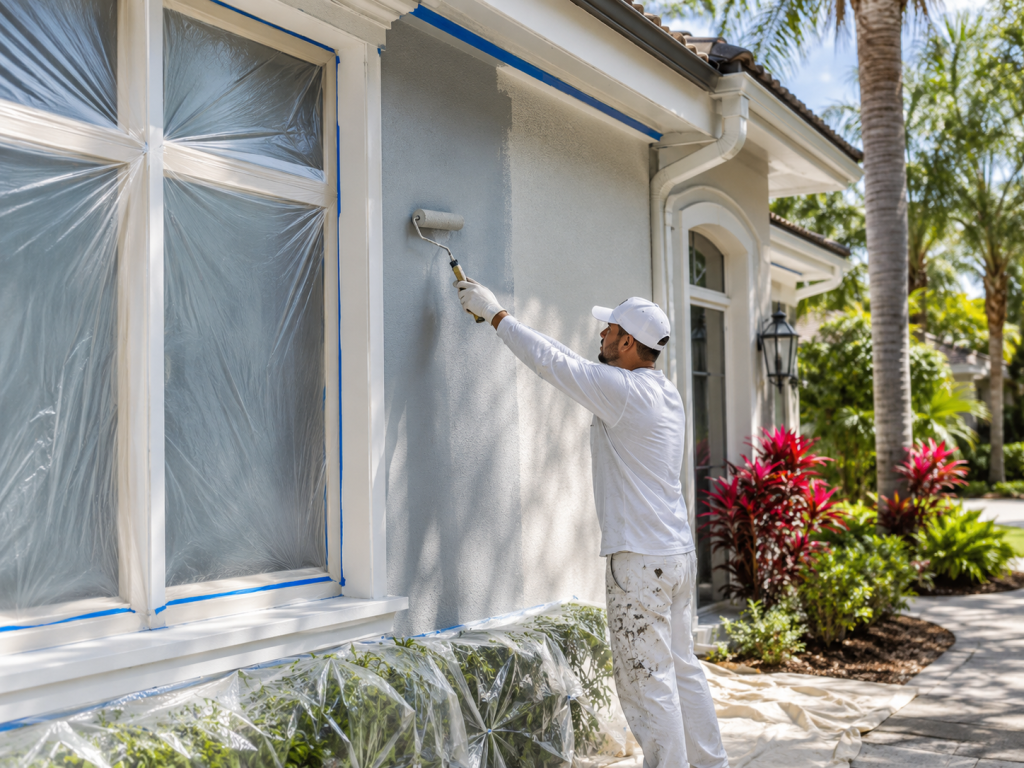
Before painting begins, we mask and protect every surface that is not being painted. Windows, doors, light fixtures, house numbers, and mailboxes are masked with painter’s tape and plastic sheeting.
Landscaping, walkways, driveways, pool decks, and outdoor furniture are covered with drop cloths and plastic. We take special care to protect landscaping plants, as pressure washing chemicals and paint drips can damage vegetation if not properly controlled.
Step 4: Priming
Primer is the critical bonding layer between the substrate and your topcoat. On Tampa Bay homes, we use primer strategically based on surface conditions: bonding primer on glossy or previously painted surfaces, stain-blocking primer over tannin bleed from wood and water stains, mildew-resistant primer on north-facing walls and areas with persistent biological growth, and masonry primer on bare stucco and concrete block.
Proper priming ensures adhesion, blocks stains, provides uniform absorption, and extends the life of the topcoat.
Step 5: Topcoat Application
We apply a minimum of two full coats of premium exterior paint using the method best suited to each surface. Spray application covers large stucco expanses efficiently with an even, consistent finish. Brush application provides precise control on trim, edges, and detailed architectural features.
Back-rolling follows spray application on some surfaces to ensure proper paint penetration into the texture. All coats are applied at manufacturer-recommended mil thickness with proper dry time between coats — rushing this step in Tampa’s humidity can trap moisture and cause coating failure.
Products Built for Florida’s Climate
Not all exterior paint is created equal, and products that perform well in northern climates often fail prematurely in Tampa’s conditions. We specify 100% acrylic latex exterior coatings from premium product lines including Sherwin-Williams Duration, SuperPaint, and Resilience, and Benjamin Moore Aura Exterior and Regal Select Exterior.
These formulations share the characteristics that matter most in Florida: superior UV resistance to prevent fading and chalking, excellent flexibility to accommodate thermal expansion and contraction of stucco and wood, high moisture resistance to prevent water intrusion, built-in mildewcides to inhibit biological growth, and strong adhesion that maintains film integrity through years of weather exposure.
We recommend satin finish as the standard for most exterior surfaces — it provides a subtle, attractive sheen that resists dirt pickup and is easy to clean, while hiding minor surface imperfections better than semi-gloss.
For trim, shutters, and architectural details, semi-gloss provides a polished contrast against the satin body color. Flat exterior finishes can be appropriate for specific applications but are generally more susceptible to dirt and mildew retention in Florida’s climate.
When to Repaint Your Tampa Home’s Exterior
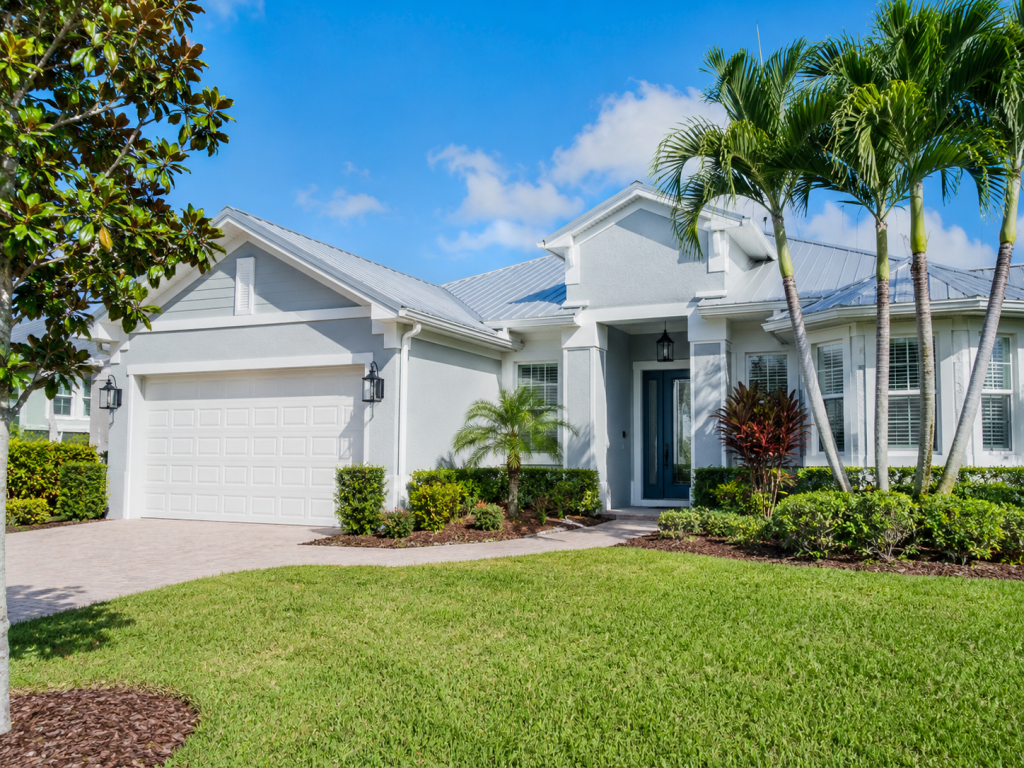
The lifespan of an exterior paint job in Tampa depends on several factors: the quality of the original preparation and products, the amount of direct sun exposure, the home’s orientation and exposure to wind-driven rain, the presence of shade trees or structures that promote mildew growth, and the substrate material.
As a general guideline, properly painted stucco homes in Tampa should expect 7 to 10 years between repaint cycles. Wood-sided homes may need attention every 5 to 7 years. Homes with significant south and west sun exposure may show fading faster than homes with more northern orientation.
Signs that your home needs repainting include visible chalking when you run your hand across the surface, noticeable color fading particularly on sun-exposed walls, hairline cracks in stucco that were not previously present, caulking that has dried out and cracked or separated from surfaces, mildew or algae that returns quickly after cleaning, peeling or blistering paint on any surface, and bare wood or stucco visible through the coating.
Get a Free Exterior Painting Estimate
Protect and beautify your Tampa Bay home with a professional exterior paint job built to withstand Florida’s climate. Contact Enos Executive Painting at (813) 907-5444 or complete our online estimate request form for a free, no-obligation consultation. We serve homeowners throughout Tampa, Wesley Chapel, Brandon, Land O’ Lakes, Riverview, Lutz, and all surrounding communities.