
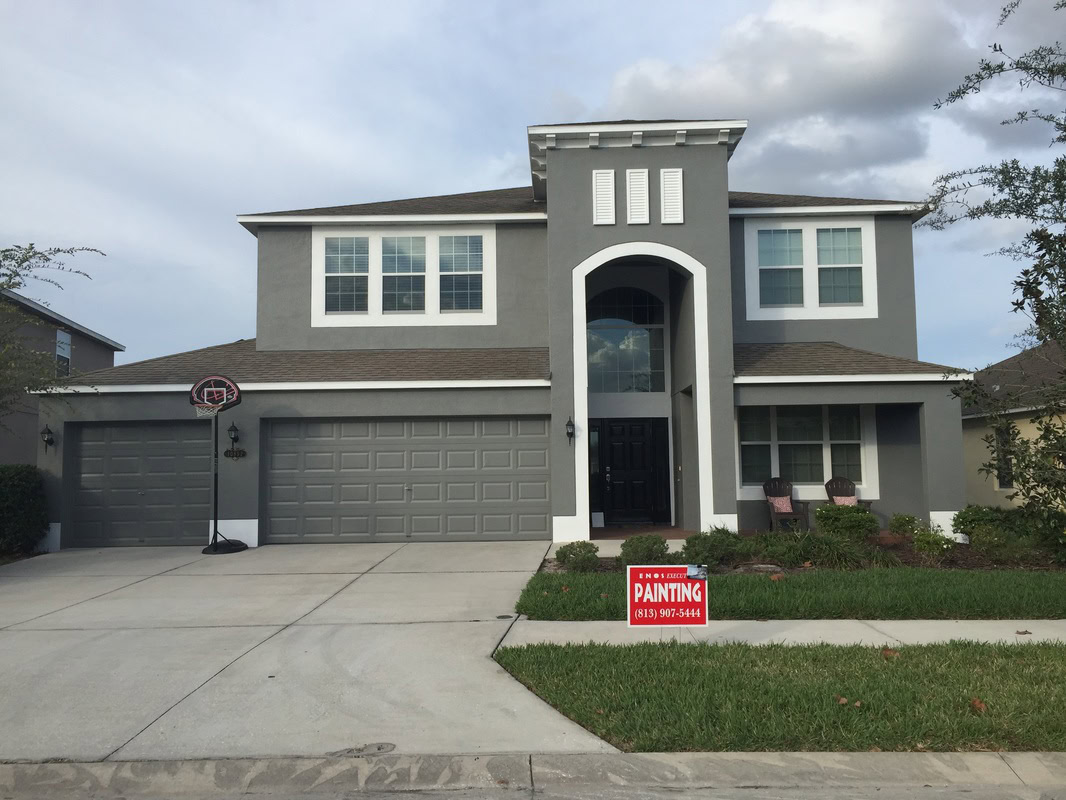

Your home’s exterior paint does more than provide curb appeal — it’s a protective barrier that shields your home’s structural surfaces from moisture, UV damage, and biological attack. When that barrier begins to fail, the consequences extend far beyond aesthetics. Moisture penetrates stucco and wood, mildew establishes itself in places you can’t see, and repair costs escalate. Recognizing the early warning signs of paint failure allows you to repaint proactively before expensive damage occurs.
1. Chalking
Run your hand across your home’s exterior stucco or painted surface. If your palm comes away covered in a fine, white, powdery residue, your paint is chalking. Chalking is the result of UV radiation breaking down the paint’s binding agents, causing the paint film to literally powder away at the surface. In Tampa’s intense sunlight, chalking is the most common first sign of exterior paint degradation, and it typically appears first on south- and west-facing walls that receive the most direct sun exposure.
Moderate chalking is a sign that your paint is aging but still providing some protection. Heavy chalking — where the surface feels gritty and the powder transfer is thick — indicates the coating has significantly degraded and repainting should be planned within the next 6 to 12 months. Waiting too long after heavy chalking begins means the underlying surface loses its protective coating and becomes vulnerable to moisture intrusion and biological growth.
2. Visible Fading
Stand at the corner of your home and look along the walls. Can you see a noticeable difference in color between the sun-exposed surfaces and the shaded areas? Significant fading indicates that UV radiation has degraded the paint’s pigments. Darker colors show fading more dramatically than lighter ones, but even light-colored homes can develop uneven fading that makes the exterior look patchy and neglected.
Some fading is inevitable in Tampa’s climate, but premium paints with UV-resistant pigments hold their color significantly longer than economy products. If your home is showing dramatic fading after only 3 to 5 years, the original coating may have been a lower-quality product, and upgrading to a premium exterior paint during the next repaint will provide much longer color retention.
3. Cracking, Peeling, or Bubbling
Any visible cracking, peeling, flaking, or bubbling in the paint film is a clear sign that the coating has failed and is no longer protecting the surface beneath. In Tampa, cracking often begins at stress points — around window and door frames, at corners and transitions, and along stucco expansion joints — where the substrate experiences the most thermal movement.
Peeling and bubbling typically indicate a moisture problem. Either water has penetrated behind the paint film through gaps in caulking or through cracks in the stucco, or the paint was applied over a surface that wasn’t properly cleaned and dried. Regardless of the cause, any area where paint has separated from the substrate is allowing moisture direct access to your home’s structural surface, and repainting should be prioritized.
4. Mildew and Algae That Won’t Stay Gone
Mildew and algae growth on exterior surfaces is a fact of life in Tampa. But if you’re noticing that dark mildew staining returns within weeks of cleaning, it’s a strong indication that your paint’s built-in mildewcide has been depleted. Fresh premium exterior paint contains mildewcide additives that inhibit biological growth on the paint surface for years. As the paint ages and these additives break down, mildew establishes itself more readily and returns faster after cleaning.
Rapidly recurring mildew is particularly common on north-facing walls, under eaves and soffits, and in areas shaded by trees — anywhere that receives less direct sunlight and stays damp longer. If you’re cleaning these surfaces multiple times a year and the mildew keeps returning, it’s time to repaint with a premium product that will provide fresh mildewcide protection.
5. Caulking Failure
While caulking failure isn’t technically a paint problem, it’s closely related and almost always coincides with the need for repainting. The caulk around your home’s windows, doors, and trim joints is a critical component of the weather barrier. When caulk dries out, cracks, shrinks, or separates from surfaces — all of which happen within 5 to 10 years in Tampa’s climate — it creates gaps that allow water to penetrate behind both the caulk and the adjacent paint.
Inspect the caulk lines around every window and door on your home’s exterior. If you see gaps, cracks, or sections where the caulk has pulled away from the surface, water is getting in. Re-caulking is a standard part of our exterior painting preparation process, so addressing caulking failure and repainting at the same time is both practical and cost-effective.
What to Do If You See These Signs
If your Tampa home is showing any of these warning signs, the best step is a professional assessment. Contact Enos Executive Painting at (813) 907-5444 for a free exterior evaluation. We’ll assess the condition of your paint, caulking, and stucco, and provide honest guidance on timing and scope for your next repaint.